





October 12, 2026
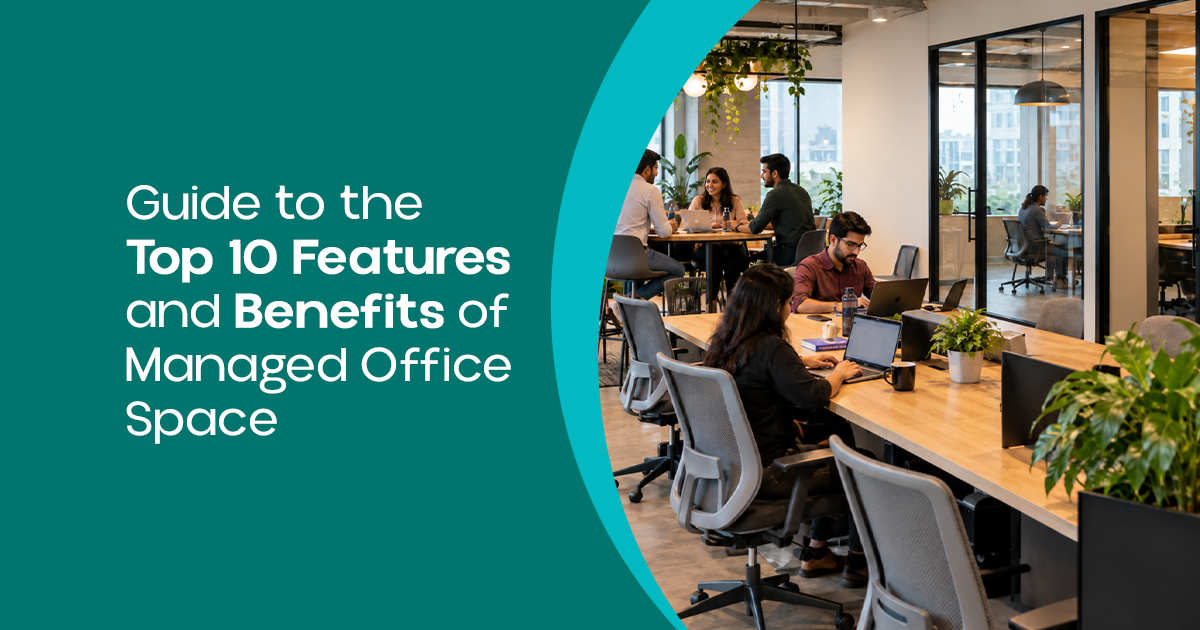
Guide to the Top 10 Features and Benefits of Managed Office Space
Choosing the right workplace has become a strategic business decision rather than a simple real estate choice. Companies now expect offices to support productivity, brand identity, security, employee experience, growth, and cost control without creating unnecessary operational complexity. This is where managed office space has become increasingly relevant.
A managed office combines a private, ready-to-use workplace with professional day-to-day management. Instead of separately coordinating interiors, utilities, maintenance, technology, security, and workplace services, businesses can operate from a space where these elements are organised through one solution. For growing companies, enterprises, project teams, and organisations entering new cities, this model can reduce setup effort while preserving greater control over the workplace.
What is Managed Office Space?
Managed office space is a private workspace designed, equipped, and operated business by a professional workspace provider. Unlike conventional leases, where the occupier typically manages fit-outs, furniture, utilities, maintenance, and multiple vendors, a managed office brings these requirements together within a serviced workplace arrangement.
The exact scope varies by provider and agreement. Some managed offices include customised layouts, meeting rooms, IT infrastructure, housekeeping, reception support, utilities, maintenance, access control, and workplace management. Businesses should therefore review what is included, service standards, commercial terms, security responsibilities, and expansion options before signing an agreement.
New Wave: Managed Office Space Gaining Momentum
Demand for flexible and managed workspaces in India continues to expand as companies seek faster setup, adaptable capacity, and professionally managed environments. Cushman & Wakefield reported that flexible workspace operators leased more than 191,000 seats across India’s top eight cities during the first half of 2026, with GCCs accounting for 44% of flex seat demand.
This growth does not mean managed offices suit every organisation. Traditional leases can still work well for companies seeking long-term control over a fixed location. Managed office space is particularly useful when speed, scalability, predictable operations, or reduced setup responsibility are important.
Features of Managed Office Space
#1 - 100% Customised Offices
One of the strongest features of managed office space is the ability to create a workplace around business requirements. Layouts can be planned according to team size, departments, meeting needs, collaboration patterns, leadership cabins, breakout zones, and employee workflows.
Customisation may also extend to furniture, finishes, meeting-room configurations, access systems, signage, and workplace technology. This creates a more purposeful environment than simply occupying a standard furnished office.
#2 - Separate Brand Identity
A private managed office can reflect a company’s own identity instead of feeling like a generic shared workspace. Reception elements, wall graphics, brand colours, signage, meeting rooms, and selected interior details can often be customised.
Maintaining a visible brand identity can be valuable for employee culture, client meetings, recruitment, and everyday workplace experience. The level of branding permitted should be confirmed during the planning stage.
#3 - Space Privacy
Managed offices usually provide dedicated work areas for one organisation, helping teams maintain privacy while still accessing professionally maintained workplace infrastructure.
Private cabins can be especially useful for leadership discussions, client meetings, confidential projects, finance teams, HR functions, and focused work. Businesses should confirm which areas are exclusively occupied and which facilities, if any, are shared with other users.
#4 - Data Security
Physical workspace design can support an organisation’s broader information security practices. Dedicated access points, controlled entry, private networks, visitor management, CCTV, and restricted server or IT areas may form part of a managed office solution.
However, a managed office does not automatically guarantee data security. Companies should assess network architecture, access permissions, cybersecurity responsibilities, vendor practices, backup systems, and compliance requirements before moving sensitive operations into any workspace.
#5 - Scalability and Facility Management
Business requirements rarely remain fixed. Managed office space can provide options to add seats or expand into additional space when availability and contract terms allow. This can help companies respond to hiring, project growth, restructuring, or market entry without rebuilding an office from the beginning.
At the same time, routine facility responsibilities such as maintenance, housekeeping, utilities, repairs, and vendor coordination are generally handled by the workspace operator. This combination of scalability and managed operations can reduce the internal effort required to run the workplace.
Benefits of Managed Office Space
#1 - Effective Budgeting
Traditional office setups can involve deposits, fit-out costs, furniture purchases, technology installation, utilities, maintenance contracts, and multiple recurring payments. A managed office can consolidate many of these expenses into a more structured commercial arrangement.
This may improve budget visibility, but businesses should compare the total occupancy cost rather than focusing only on monthly pricing. Deposits, taxes, meeting-room charges, parking, extra services, escalation clauses, and termination conditions should all be reviewed.
#2 - Organisational Flexibility
Managed offices can support companies whose workforce or location strategy may change. A business entering a new city, building a project team, testing a market, or expanding a regional operation may prefer a solution that does not require managing every element of a traditional office setup.
Contract flexibility varies considerably, so decision makers should compare lock-in periods, expansion rights, notice periods, renewal terms, and relocation options before committing.
#3 - Employee Empowerment
A well-planned workplace can make everyday work easier. Reliable internet, comfortable workstations, appropriate meeting rooms, clean common areas, collaborative zones, and responsive facility support can reduce workplace friction.
Employee empowerment also depends on factors beyond infrastructure, including management practices, workload, culture, accessibility, and flexibility. Managed office space can support a better employee experience, but the workplace should be designed around how teams work.
#4 - Operational Excellence
Running an office requires continuous coordination. Maintenance issues, internet problems, housekeeping, utilities, access management, repairs, and vendor follow-ups can consume internal time.
By shifting many facility responsibilities to a specialist provider, companies can reduce administrative workload and allow internal teams to concentrate on business priorities. Service-level expectations should be documented clearly, so response times, responsibilities, escalation procedures, and support standards are understood from the outset.
#5 - More Than Tech-Enabled Spaces
Modern managed offices increasingly combine technology with workplace services and human support. Digital access, meeting-room systems, connectivity, visitor management, and workplace tools may improve convenience, but technology alone does not create an effective office.
Location, natural light, acoustics, ergonomics, service quality, cleanliness, safety, meeting capacity, and everyday responsiveness remain equally important. Providers such as SpazeOne position managed workspaces around this broader operational experience rather than treating the office only as a technology-enabled product.
Conclusion
Managed office space offers businesses a practical middle ground between conventional leasing and highly shared workspace models. Its main value lies in combining privacy, customisation, scalability, professional facility management, and more predictable workplace operations within one solution.
The right choice depends on business size, growth plans, security requirements, budget, location strategy, contract terms, and desired level of control. Companies comparing managed offices should evaluate the complete service scope, not just appearance or headline pricing. A carefully selected managed office can simplify workplace operations while giving teams an environment designed to support focused, flexible, and efficient work.
Before signing, visit the site, test connectivity, inspect facilities, verify inclusions, and speak with the provider about future expansion requirements clearly.
FAQs
1. What is the difference between managed office space and coworking space?
Managed office space usually gives one company a private, customised workplace with dedicated branding, layouts, access control, and managed facilities. Coworking spaces are generally more shared, with individuals or multiple companies using common work areas and amenities.
2. Is managed office space suitable for growing businesses?
Yes. Managed office space can suit growing businesses because it offers faster setup, flexible capacity, professional facility management, and the ability to scale when requirements change. Businesses should still review expansion options, contract terms, included services, and total occupancy costs before choosing a space.